WhatsApp
The most obvious sign of turbidity in a thickener is an unclear solid-liquid interface. This means that the overflow water becomes turbid, and the liquid carries fine particles that cannot be effectively separated. In practice, thickener mixing may manifest in the following ways.
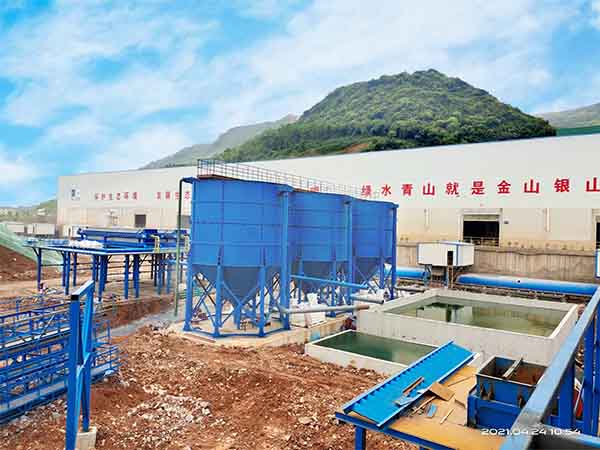
Thickener overflow turbidity
1. The overall concentration inside the thickener increases, the slurry becomes unseparated, and turbidity occurs.
2. Abnormal underflow concentration. Clogged underflow pump prevents normal underflow delivery, or excessive feed concentration leads to poor settling.
3. The flocculant dosing system is malfunctioning. Improper flocculant dosing prevents particles from effectively agglomerating and settling.
4. When the machine is restarted after a power outage or shutdown, the rake stirs the lower layer of mud too quickly, causing particles to float and the material to become blurred.
5. The thickener’s water supply is turbid, causing the thickener to run out of water.
Solving the problem of turbidity requires strict control of the fineness and concentration of the feed, and ensuring that the flocculant is added correctly. At the same time, conducting static tests on materials to determine the optimal flocculation concentration and settling rate is also an important means of preventing thickener overflow turbidity.
Send us a message
We will provide you with the most professional services.