WhatsApp
Solutions for thickener overflow turbidity include controlling the fineness and amount of feed, adjusting the liquid-solid ratio, fixing blockages in the underflow pump, checking the flocculant system, adjusting the washing water, and avoiding stirring the mud layer after shutdown.
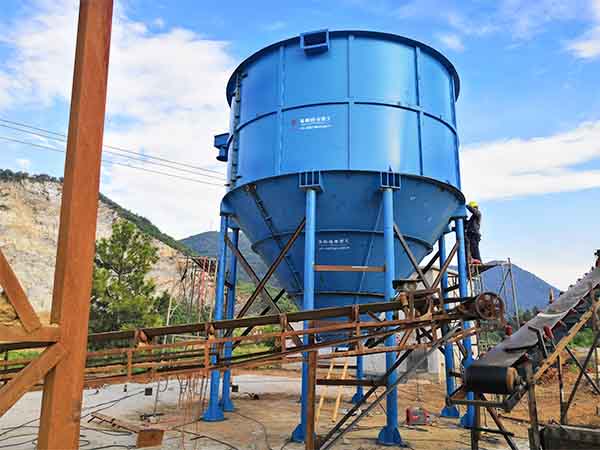
How to restore the thickener after it overflow turbidity?
1. Control the fineness and quantity of feed
Strictly control the fineness of the feed material to the thickener to ensure the stability of the feed rate. Avoid drastic fluctuations in fineness and ore quantity to ensure stable operation of the thickener.
2. Adjusting the liquid-solid ratio
The optimal feed concentration for the thickener is 25%-30%. With the addition of supernatant for dilution, the actual slurry concentration can be maintained at around 18%-25%. At this concentration, the flocculant achieves the best flocculation effect.
3. Solve the underflow pump blockage
If the underflow pump of the thickener is blocked, it should be cleared in time to prevent turbidity from flowing out.
4. Inspect the flocculant system
If turbidity is caused by a malfunction in the flocculant system, the malfunction needs to be addressed promptly to prevent turbidity from recurring.
5. Adjust the washing water
If the thickener overflow turbidity due to turbid washing water, adjust the washing water promptly and wash with clean water.
6. Avoid stirring the mud layer after shutdown
To avoid mixing after the thickener is stopped, start it at a lower front blade speed when restarting to prevent mixing immediately after startup.
Send us a message
We will provide you with the most professional services.